Friday, April 14, 2023

BIA ACTS IN ARBITRARY and CAPRICIOUS MANNER in ENDING CDIB FOR NATIVES INCLUDING DISENROLLED


Sample not for use as CDIB


We have written on the BIA/CDIB Issue a few times  linked here
:

NCAI Takes A STAND on BIA's CDIB FOIBLES & Failures  and Gabe Galanda: The BIA's BLOOD TROUBLE

Now, NATIVEPEDIA and Emilio Reyes have extensive scholarship on the arbitrary and capricious action 
San Diego, California, April 14. 2023:  Today, Nativepedia, a  California Native American company specializing in  research, education and advocacy,  has released  extensive research  on a silent issue affecting Native Americans:    Non-Federally Recognized California Indians: The Rescission of the CDIB policy. There is no question that the Department of the Interior; the Bureau of Indian Affairs, and other departments within the Interior are entirely responsible for this matter. As a result,  thousands of Native Americans are affected. 

Attached please find: "Non-Federally Recognized California Indians: The Rescission of the CDIB policy." Alternative link via WeTransfer: https://we.tl/t-XcLlWw9VwR & Scribd: 

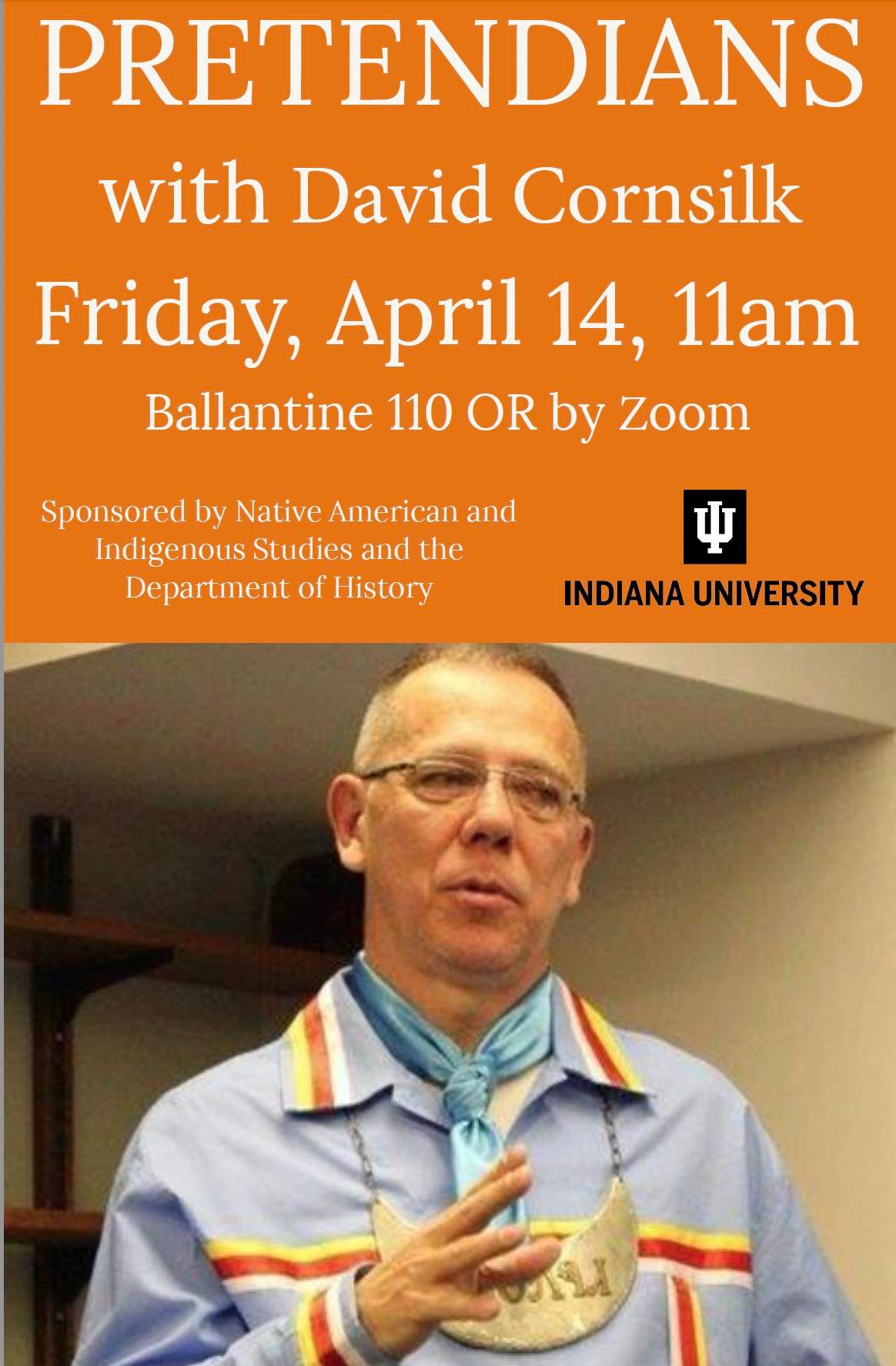
Cherokee Genealogist DAVID CORNSILK on PRETENDIANS Seminar

 Coming from noted genealogist and current Cherokee Nation leadership candidate David Cornsilk this Friday, April 14 at 11 a.m. ET at Indiana University and via Zoom simultaneously.
David wrote on CLEARING UP MISCONCEPTIONS ABOUT CHEROKEE IDENTIFICATION    And supported the TREATY RIGHTS of the Cherokee Freedmen, where they were victorious.

Register here: https://iu.zoom.us/.../tZwtf-ihrDwrE9dlXHRHD3xYU1HWRegcSOVX

Be sure to pay attention to motives and biases of all involved.  (h/t Rob Capriccioso-Indigenous Wire)


PLEASE TRY TO ATTEND and tell your friends..


Thursday, April 13, 2023

Congress Urged to Take Action on Disenrollment Crisis Over 11,000 Native Americans Stripped of Tribal Citizenship. Not Including the Ancestors


Here's a letter you can copy and fill in to send to your Congressperson  See HOW TO CONTACT YOUR CONGRESSPERSON


Dear Members of Congress,

I am writing to express my grave concern about the ongoing disenrollment of Native Americans from their tribes, which has resulted in the stripping of tribal citizenship from over 11,000 individuals. This egregious practice, which has been carried out by some tribal leaders without regard for due process or tribal constitutional guidelines, represents a serious violation of the rights and well-being of Native Americans across the United States.

Disenrollment is a deeply traumatic experience that can result in the loss of cultural identity, community ties, and access to critical resources such as healthcare and education. Moreover, disenrollment often occurs without due process or adherence to tribal law, leaving individuals and families without recourse to challenge the decision or seek redress.

It is unacceptable that this practice continues to occur in the United States, and it is imperative that Congress takes immediate action to address this issue. Specifically, I urge you to:

Tuesday, April 11, 2023

10,000 Native Americans Disenrolled and Denied Healthcare: The Tragic Consequences of Inaction by Congress, Government Agencies and Advocates

Disenrollment of indigenous people is a grave injustice that must be addressed by those purporting to support and defend Native Americans.


This despicable practice, the stripping of tribal citizenship, proven to be born of corruption and greed, has been allowed to flourish under the guise of sovereignty by some tribal governments.

Congress must take action to hold accountable those who misuse their sovereign powers to harm their own people.

As we confront this issue, it is important to recognize the complexity of the historical and cultural context in which it arises. Achieving meaningful and lasting change requires sustained engagement and constructive dialogue between all stakeholders, including indigenous communities, government agencies, legal experts, and Native advocacy groups (NARF, NCAI) and all of US.

As Elie Wiesel famously said, "Neutrality helps the oppressor, never the victim Silence encourages the tormentor never the tormented"

Nowhere is this more evident than in the issue of disenrollment of indigenous people, which has devastated tribal communities across the United States. As individuals, as organizations, and as a society, we must speak out against this injustice and take action to hold those responsible accountable. Neutrality in the face of disenrollment only perpetuates the harm and oppression faced by indigenous people, while silence enables those who perpetrate these abuses. 

It is time for all of us to come together and work towards a more just and equitable society for all, one that upholds the dignity and rights of indigenous communities and respects their unique identities and cultures. The Congress, BIA, DOJ, White House, NCAI, NARF, Senate Committee on Indian Affairs, and all other stakeholders must take action to halt the destruction of tribal communities and promote healing and reconciliation.

How to Fight the Dark Side of Tribal Sovereignty: Uncover and SHARE the Truth About Disenrollment To Restore Fairness and Equality to Tribal Communities


Doing the right thing isn't HARD

Attention all defenders of civil rights! Have you ever felt powerless in the face of corruption and mistreatment by tribal councils? Are you tired of seeing your friends and loved ones disenrolled, hurt, and violated by those in power? It's time to take action and demand justice for all.   

Where are the tribal leaders who will stand for justicd?   Holding our tribal leaders to a higher standard of integrity and transparency will ensure that tribal sovereignty truly benefits all members and not just a select few.  BE A LEADER in this fight.

But the very few of us can't do it alone. We need YOU to join us in the fight against disenrollment on a consisten basis. We need your voices, your passion, and your commitment to help us make a difference. Don't just sit back and watch as your fellow community members suffer. Ask yourself: what can I do to help?

We understand that life can be busy and it may be difficult to get involved in person. But there are many ways you can help from the comfort of your own home, such as visiting blogs regularly to help drive up awareness and let those in power know that people are watching by sending emails, it's so easy.

We cannot let corrupt tribal councils continue to violate our civil rights. It's time to band together, honor our ancestors who suffered at the hands of an oppressive government, and defend our rights. We need OFFENSE, not just defense.


Sunday, April 9, 2023

Easter's Message of Forgiveness and Hope: A Relevant Reminder for Disenrolling Tribes on Restoration and Justice


The celebration of Easter is a reminder of the forgiveness of sins and the hope of eternal life that is available to believers through Jesus Christ. This message of forgiveness and redemption is one that can be relevant to disenrolling tribes like Pala, Pechanga, Redding Rancheria, Chukchansi, Noooksack, as well. Disenrollment is the process of removing individuals or families from tribal membership, often due to disputes over lineage or other political or personal issues. This process is painful and divisive, leading to broken relationships and a sense of loss of identity and community.

In seeking forgiveness, disenrolling tribes may find healing and restoration for these broken relationships. Forgiveness is a powerful force that can bring reconciliation and unity where there was once division and conflict. It requires humility and a willingness to let go of grudges and grievances, but the rewards can be significant. 

From me in 2007
It's interesting to think about what the remaining 
Pechanga  and  other disenrolling tribal members  pray and think about when they go to church.

Do they pray that:

1. God won't remember what they have done to their family and ours?
2. Well, I really didn't believe in the 5th, 8th, 9th or 10th commandment anyway?
3. I can come here and people will see me and think it wasn't me that voted against stopping
disenrollments
4. I'll just give more to the collection plate and that will get me off the hook.
5. Please, God, let there be more slot machines.
6. Don't they know that $380, 000 per year is not enough for us to share?
7. Why are they always picking on us? Are civil rights, elder abuse, voting rights that important?
8. Why did those Hunters have so much evidence and STILL got disenrolled?
9. I sure hope the tribal council didn't lie about stopping more disenrollments!
10. Please, God, I'm not really happy about it, but I didn't do anything about it
11. Are the terminated REALLY your people, Lord?

Should Christian customers patronize a business that treats its family so terribly? Should Christians spend money for dinner at a place that abused their elders and children? Should churches hold luncheons at a place like this? Please ask your local ministers and committees to not spend church funds at Pechanga.

Just as interesting a question: What has the parish priest talked to his flock out the situation?  How much of the catechism has the CPP broken?
Are they still taking communion?
What penance did they get for ruining the lives of so many?

Saturday, April 8, 2023

Aunt Em, Emily Judkins, Vaunted Pechanga Matriarch's 1981 Profile in Who's Who in Temeku

 Proud Pechanga elder Emily Hunter Judkins was profiled in a 1981 newspaper article  WHO'S WHO in TEMEKU by Ken Clements.

She resided permanently on her portion of the 20 acres that Paulina Hunter, an original Pechanga Temecula person, was alotted.


Emily Judkins was proud to be from Pechanga and was an active member of the tribe.  In those days, there were no paid jobs or glory for volunteers.  She was one of the few reservation  residents that were educated and could handle many of the legal matters for the tribe on matters the Bureau of Indian Affairs needed.

How many of the current tribal members can say they volunteer to do anything other than enjoying the free lunch at meetings?  Aunt Emily worked on the Pechanga enrollment committee and wrote letters of concern about enrolling people that didn't have the documentation to prove lineage.   They are Francisca Leyvas descended and later formed a Splinter group, and after that worked to disenroll two large families from the tribe, including Aunt Emily, well after her death...

Honoring Indigenous Rights: Why Fulfilling the Provisions of the Treaty of Guadalupe Hidalgo Matters Now More Than Ever

My uncle David Cuevas, always said the key to our rights was in the treaty of Guadalupe Hidalgo.  The State of California and the Federal Government have violated the treaty, and disenrolling tribes are doing the same.
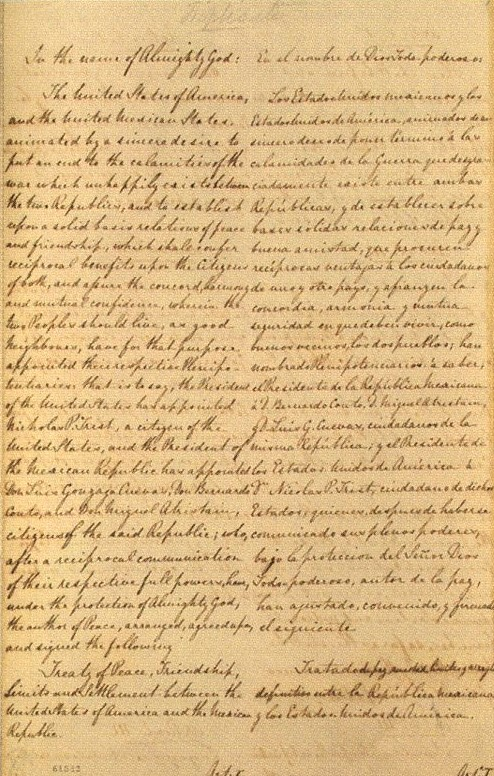
Treaty of 
Guadalupe Hidalgo

The Treaty of Guadalupe Hidalgo was signed in 1848, bringing an end to the Mexican-American War and ceding a vast territory to the United States that included what is now California, Arizona, New Mexico, Nevada, Utah, and parts of Colorado, Wyoming, Kansas, and Oklahoma. The treaty included provisions meant to protect the rights of indigenous peoples in these newly acquired territories, including a promise to honor existing land grants and to respect the property rights of Native American communities.

Disenrolling tribes violate the Treaty of Guadalupe Hidalgo by denying indigenous peoples their right to self-determination and recognition. The Treaty of Guadalupe Hidalgo recognized the property rights of Native American communities and guaranteed their protection. By disenrolling members of these communities, the treaty's provisions are ignored, and their rights to self-governance and recognition are violated.

Despite the treaties promises, the United States government has a long history of violating the Treaty of Guadalupe Hidalgo and failing to uphold its obligations to Native American tribes and communities. Some of the ways in which the treaty has been violated or ignored include:

Land theft: Under the treaty, existing land grants were supposed to be respected, but in many cases, Native American lands were simply taken by force, often through violence and coercion. Native Americans were frequently pushed onto reservations, where they were forced to give up their traditional ways of life and were subjected to harsh living conditions.

Broken promises: The treaty included provisions meant to protect the rights of indigenous peoples, but the U.S. government has frequently failed to live up to its promises. For example, many treaties signed with Native American tribes were later abrogated or ignored, leaving Native American communities without the protections they were promised.

Cultural erasure: Native American cultures and traditions were frequently suppressed or erased in the wake of U.S. colonization, as the government sought to assimilate Native Americans into Euro-American ways of life. This included policies such as forced boarding schools, where Native American children were taken from their families and communities and taught to reject their cultural heritage.   Now disenrolling tribes follow this same practice!

These and other forms of mistreatment and injustice have had lasting impacts on Native American communities, contributing to ongoing challenges such as poverty, health disparities, and cultural dislocation. However, upholding the Treaty of Guadalupe Hidalgo could help to redress some of these historic wrongs and support the rights and well-being of Native American communities.

To follow the treaty's provisions would mean respecting the sovereignty and self-determination of Native American tribes, honoring existing land rights and treaty agreements, and ensuring that Native American communities have a say in decisions that affect their lives and well-being. It would also mean investing in cultural revitalization efforts and supporting Native American languages, traditions, and practices.

Upholding the Treaty of Guadalupe Hidalgo is not only a matter of fulfilling past promises, but also a matter of promoting justice, equity, and respect for indigenous rights and sovereignty. By recognizing and addressing the harms of past injustices and committing to a more just and equitable future, we can work to support the well-being of Native American communities and promote a more just and inclusive society for all.

Disenrolling tribal members denies them access to important resources and services provided by the tribes, such as healthcare, education, and cultural programs. This not only harms disenrolled individuals but weakens the overall community's ability to exercise their sovereignty and fulfill the provisions of the treaty.
 

Disenrollment also exacerbates existing inequities, as those who are disenrolled may be more vulnerable to poverty, discrimination, and violence. Disenrolling members of Native American tribes runs counter to the Treaty of Guadalupe Hidalgo's goals of promoting self-determination, sovereignty, and recognition of indigenous rights.

LEARN MUCH MORE ON DISENROLLMENT HERE

Honor the Legacy of Our Ancestors: Embracing All California Indians with Open Arms, Disenrollment Must Not Divide Our Communities

Native American tribal leaders MUST remember the great injustices and violence inflicted upon the indigenous people of California by colonizers and European settlers. 

They must recognize the resilience and strength of our ancestors who survived this wholesale slaughter, and honor their legacy by welcoming any and all who identify as California Indians back into our communities with open arms.

Disenrollment from tribes must not be used as a tool to divide and exclude our people. Instead, we must come together and stand united in our pursuit of sovereignty, recognition, and justice. It is our duty to demand that our people be accepted and embraced as full members of our communities, regardless of any attempts to disenroll them.

We must continue to resist and challenge the ongoing colonization and oppression of indigenous peoples by corrupt tribal leaders, and work towards a future where all California Indians can thrive and reclaim our ancestral lands and cultures.

STOP FIGHTING FEDERAL RECOGNITION.

Thursday, April 6, 2023

Nooksack 306 ELDERS Face INJUSTICE With NO Legal Representation for their UNJUST EVICTION HEARING


The situation in which three Nooksack306 families face eviction after renting to own their tax credit homes for 15+ years is unjust and morally wrong. These families have invested their time, money, and energy into these homes, with the understanding that they would eventually own them. However, they are now being evicted with no legal representation, leaving them vulnerable and unprotected in a complex legal process. Federal and state authorities have remained silent on this matter, failing to intervene and protect these families from this gross injustice.

Federal and State Authorities Remain Silent as Nooksack306 Families Fight for Their Right to Property Ownership  

The denial of the families' right to counsel is a significant violation of their rights, leaving them without the legal support they need to defend themselves in court. This lack of representation places the elders at a severe disadvantage, as they attempt to navigate the complicated legal system on their own. Without the assistance of experienced lawyers, the families may be unable to effectively argue their case, resulting in their eviction from their homes. This denial of their right to counsel is a flagrant disregard for the principles of justice and fairness that underpin our legal system.

That the families are being evicted after renting to own their tax credit homes for over 15 years is an affront to the idea of property ownership. The families have invested significant time and money into these homes, with the understanding that they would eventually become the rightful owners. However, by evicting them now, the system has robbed them of this opportunity, denying them the fruits of their labor and their right to own property. This is a grave injustice that must be addressed.


Overall, the silence of federal and state authorities, like Washington's U.S. Senators Patty Murray and Maria Cantwell  in the face of this situation is unacceptable. These families deserve better, and it is our duty as a society to ensure that they are treated fairly and justly.

The denial of their right to counsel, the loss of their homes, and the violation of their right to property ownership all represent egregious wrongs that must be addressed. It is essential that we stand up for these families and demand justice on their behalf.

Disenrollment IS an Indian Country DISASTER: The Human Cost of Tribal Councils' Abuse of Power and Exclusionary Practices


Doing the RIGHT thing should be EASY


As our Indigenous communities continue to suffer from centuries of colonization and systemic oppression, a new crisis is emerging that threatens their very existence. Tribal disenrollments, moratoriums, and corruption are creating a 21st century bloodless genocide that is destroying the cultural fabric and social cohesion of Indian Country.

The practice of disenrollment has become a weapon of choice for tribal leaders seeking to consolidate power at any cost and silence dissenting voices. Under the guise of protecting their communities from fraudulent claims or ensuring tribal sovereignty, tribal councils have stripped thousands of Indigenous people of their citizenship, culture, and history. This not only violates the basic human rights of those individuals but also undermines the very foundation of Indigenous communities and their collective struggle for self-determination.

The imposition of moratoriums on new enrollments or citizenship applications has created a system of exclusion that further marginalizes Indigenous people who may have ties to multiple tribes or who are seeking to reclaim their cultural identity. This practice can also lead to the exploitation of Indigenous resources by those who control tribal councils or have ties to corporations or other outside interests.

The rampant corruption within tribal governments, meanwhile, has led to the misappropriation of millions of dollars in federal funding intended to support Indigenous communities. This has left many tribes without adequate resources for essential services such as healthcare, education, and housing, exacerbating the already dire conditions in Indian Country.


Taken together, these practices amount to a 21st century bloodless genocide that is threatening the very survival of Indigenous communities. Unless urgent action is taken to address these issues and restore the principles of Indigenous self-determination, the legacy of colonization and oppression will continue to haunt Indian Country for generations to come. It is time for all Indigenous people and allies to unite against this disaster and demand justice for those whose lives and livelihoods have been destroyed by these practices.

From the Government to Corrupt Tribal Councils: Disenrollment and the Continued Marginalization of Indigenous Communities


Disenrollment , the STRIPPING of tribal citizenship/membership has far-reaching consequences for individuals and communities.

For many Indigenous people, being a member of a tribe is not just a legal status, but an important part of their identity and cultural heritage. When tribes engage in disenrollment, they are adopting the same exclusionary tactics used by the U.S. government to divide and conquer Indigenous communities, which can lead to historical trauma.

Historically, the U.S. government has used a range of tactics to undermine Indigenous sovereignty and cultural identity. These tactics include forced removal from ancestral lands, boarding school education aimed at assimilating Indigenous children into mainstream American culture, and policies that restricted Indigenous people's access to their cultural practices and spiritual traditions.

Disenrollment can be seen as another manifestation of these tactics, as it often involves the exclusion of individuals who may have ties to multiple Indigenous communities or who do not meet certain tribal criteria. This can create a sense of isolation and displacement, as individuals are cut off from the very communities that provide them with a sense of belonging and cultural identity.

Disenrollment without review is wrong

In addition to the emotional toll of disenrollment, there are also practical consequences for native Americans. Disenrollment can lead to the loss of access to important tribal resources such as healthcare, education, housing, and economic opportunities. It can also affect the ability of individuals to participate in tribal governance and decision-making, including adopting native children.

Disenrollment leads to elder and ancestor abuse within Indigenous communities, as we have seen in the Nooksack Tribe in Washington State. Tribal councils have used disenrollment as a tool to silence elders or other community members who may speak out against corruption or other forms of misconduct. This can create a climate of fear and intimidation, where individuals are afraid to challenge the status quo for fear of losing their tribal citizenship or being ostracized from their community. Elder and ancestor abuse is a serious issue that needs to be addressed by tribes and Indigenous organizations in order to create safe spaces where all members can share their experiences and perspectives without fear of retaliation.

The practice of disenrollment can create a legacy of historical trauma that can be passed down through generations. When tribes engage in exclusionary tactics, it can undermine the sense of solidarity and unity among Indigenous peoples, which is essential for addressing the ongoing impacts of colonization and systemic oppression.

Disenrollment from tribal citizenship or membership perpetuates the same exclusionary tactics used by the U.S. government to divide and conquer Indigenous communities, creating historical trauma. It is important for tribes to consider the long-term consequences of disenrollment and work towards more inclusive practices that prioritize cultural identity and community wellbeing.

Tuesday, April 4, 2023

Since Time Immemorial Has Santana Rabang, The Future of Native America's Youth, Spotlighted


My friend Santana Rabang,  executive assistant to the secretary of Lummi Nation and a student at Fairhaven College has been honored with a story about her in the Bellingham Alive online magazine series SINCE TIME IMMEMORIAL
  
We have worked together on tribal disenrollment issues and got to meet in person last year, TWICE! And she did a TikTok video with my cousin Cassie.  We protested together at the NCAI event in Sacramento last year.

She is simply the future of Native America.  Her spirit and spirituality shine through.

Here's an excerpt, the rest is at this link
Would you please introduce yourself? 

My name is Santana Rabang, and I come from Lummi, Nooksack, and First Nations Shxwhá:y Village. My mother is Felicia Lawrence of Lummi Nation, my grandmother was the late Hazel Lawrence, and my grandpa is Felix Gallegos. My great grandparents were the late Madeline Quincy and Peter Paul Lawrence. My father is Robert Rabang, Jr. of Nooksack and Shxwhá:y Village. My grandma was the late Janice Lee Rabang and my grandpa is Robert Rabang Sr. My great grandparents were the late Elizabeth Rabang and Frank Rabang.

You mentioned your parents, grandparents, and great grandparents when you introduced yourself? 

There’s this saying in our culture that you don’t know who you are unless you know where you come from. For me, that’s not only place-based, it’s also ancestral.

SO PROUD to be associated with this young native woman. Read more on the Nooksack 306

Saturday, April 1, 2023

Aren't Native Americans Entitled to Civil Rights Protections? Paul Johnson, American Indian Activist Discusses Which Civil Rights Are Being Violated.

 I'm reprising an July 2015 post where I invited a friend, Indigenous Activist Paul Johnson, to write a piece on the civil rights that we constantly talk about, but to many, they only have a vague idea what it means.    I'll add some thoughts on how these violations relate to my family's issues at Pechanga.    


The recent resolution from the NNABA supporting Equal Protection and Due Process for those who have been divested of the Right of Tribal Citizenship
is shining a light on the civil and human rights violations that accompany many of the disenrollment actions happening throughout Indian Country.  So what are these civil rights to which we refer, and how are they being violated?
When we speak of the right to due process we are citing the Fifth and Fourteenth Amendments of the U.S. Constitution. Due process provides protections to those facing a proposed action, applies in civil and criminal proceedings, and has specific requirements.
Here are the requirements in a nutshell:
1.     Unbiased tribunal
2.     Notice of proposed action and the grounds on which it is based
3.     Opportunity to present a reason why the action should not occur
4.     Right to call witnesses on your behalf
5.     Right to know what evidence is brought against you
6.     Right to have the decision based only on the evidence
7.     Right to counsel
8.     Right to a public proceeding
9.     A record of the proceedings
10.  Right to judicial review

Here is how the Fourteenth Amendment says it:
...nor shall any State deprive any person of life, liberty, or property, without due process of law; nor deny to any person within its jurisdiction the equal protection of the law.
Most disenrollees receive no prior notification that their tribal citizenship is in jeopardy. Tribes refuse to conduct hearings, or provide the opportunity to present evidence or witnesses. The decision is usually made in private meetings of Enrollment Committees, based on dubious and spurious evidence and without an independent judicial review. 

These are violations of the right to due process as guaranteed by the Indian Civil Rights Act of 1968, but the ICRA has no provision to enforce denial of due process. Was it an oversight of Congress to omit the power to enforce these rights for tribal citizens? The obvious answer is NO!

 And we'll address that in a subsequent post.